
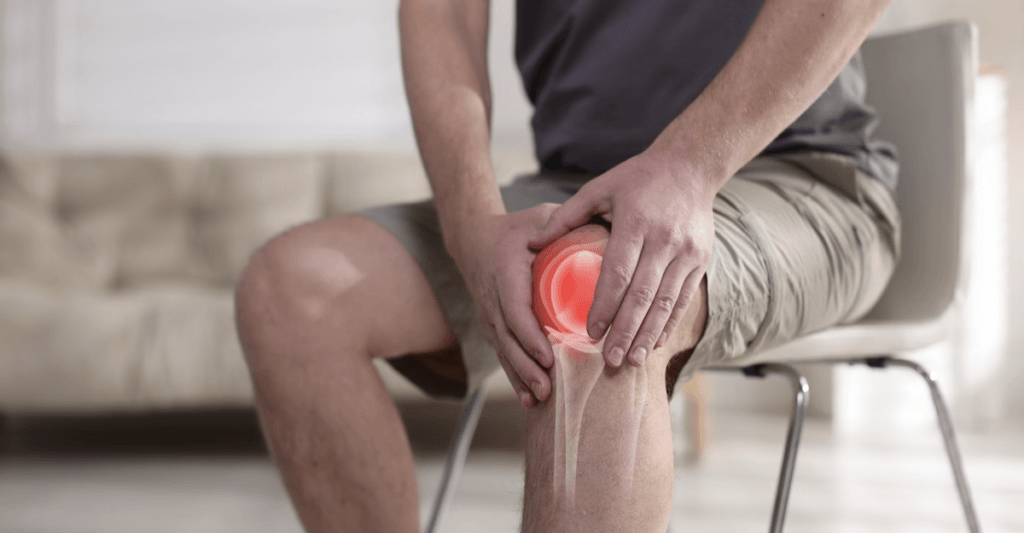
Knee pain has a way of creeping into everything. It shows up when you climb the stairs, when you sit too long in one position, when you try to get back into exercise, or sometimes for no obvious reason at all. And one of the most frustrating parts is not knowing what you are actually dealing with.
Is it arthritis? Did you do something wrong at the gym? Is it serious? Should you rest or keep moving?
If you have been sitting with those questions, this is for you. Understanding what is causing your knee pain is the first step toward doing something about it, and the good news is that most knee pain, regardless of the cause, responds very well to the right physiotherapy treatment.
Why Knee Pain Is So Easy to Get Wrong
The knee is one of the most complex joints in the body. It is not just a simple hinge. It relies on a precise relationship between bones, cartilage, ligaments, tendons, and the muscles surrounding it to function properly. When something disrupts that relationship, whether through injury, overuse, age-related changes, or movement dysfunction, pain is usually the first signal.
The challenge is that several different conditions can produce very similar symptoms. An ache on the front of the knee after a run could be runner’s knee, it could be a problem with the patella tracking, or it could be the early stages of osteoarthritis. Pain on the inner or outer side of the knee might be a ligament issue, bursitis, or referred pain from the hip or lower back. Without a proper assessment, it is genuinely difficult to know.
This is why self-diagnosing knee pain from a Google search tends to leave people more confused than when they started.
Osteoarthritis of the Knee
Knee osteoarthritis is one of the most common musculoskeletal conditions in adults, particularly those over the age of 45. It occurs when the cartilage that cushions the ends of the bones within the joint gradually wears down, leading to pain, stiffness, swelling, and reduced range of motion.
People with knee osteoarthritis often describe a deep, aching pain that is worse after periods of inactivity and then again after prolonged activity. Morning stiffness that eases within 30 minutes is a common feature. You might also notice a creaking or grinding sensation when you bend or straighten the knee, and a general sense that the joint feels less reliable than it used to.
One of the biggest misconceptions about knee osteoarthritis is that rest is the answer. In reality, the research strongly supports exercise and movement as the primary treatment. Physiotherapy plays a central role in managing osteoarthritis by strengthening the muscles around the knee, improving joint mechanics, and helping patients stay active in a way that supports rather than aggravates the joint. Many people are genuinely surprised by how much their symptoms improve with the right program.
Runner’s Knee (Patellofemoral Pain Syndrome)
Runner’s knee, known clinically as patellofemoral pain syndrome, is one of the most common causes of knee pain in active people. Despite the name, you do not have to be a runner to develop it. It affects cyclists, hikers, gym-goers, and people who spend long periods sitting with bent knees.
The pain typically presents at the front of the knee, around or behind the kneecap, and tends to be aggravated by activities like running, squatting, going down stairs, or sitting for extended periods. It often develops gradually rather than from a single incident, which is part of why people tend to push through it longer than they should.
The underlying cause is usually a combination of muscle weakness, particularly in the hip and quadriceps, and altered movement mechanics that place excessive or uneven load on the patellofemoral joint. Physiotherapy addresses this by identifying the contributing factors specific to your movement patterns and building a targeted program to correct them. Trying to push through runner’s knee without addressing the root cause tends to make it worse and significantly extends recovery time.
IT Band Syndrome
Iliotibial band syndrome is another common source of knee pain, particularly in runners and cyclists. The IT band is a thick band of connective tissue that runs along the outside of the thigh from the hip to just below the knee. When it becomes irritated and inflamed through repetitive movement, it produces a sharp or burning pain on the outer side of the knee that is hard to ignore.
IT band syndrome tends to come on at a predictable point during activity, often after a certain distance or duration, and then ease with rest. It is frequently linked to training load increases, hip weakness, and running mechanics. Foam rolling alone rarely resolves it. A physiotherapy assessment looks at the full picture, including hip strength, foot mechanics, and movement patterns, to address what is actually driving the issue.
Ligament and Meniscus Injuries
Not all knee pain comes on gradually. Injuries to the ligaments or meniscus often occur during sport or physical activity and are usually associated with a specific incident. A twisting movement, a sudden change of direction, a tackle, or a misstep on uneven ground can all place the knee in a position it is not designed to handle.
The ACL, MCL, and meniscus are the structures most commonly injured in these scenarios. Symptoms vary depending on the structure involved but often include swelling, instability, a feeling that the knee might give way, and difficulty bearing full weight. If you have had a significant knee injury and these symptoms sound familiar, getting a physiotherapy assessment promptly is important. Early and accurate diagnosis shapes the entire management plan, whether that means conservative rehabilitation or a referral for further investigation.
Bursitis and Tendinopathy
Two other conditions worth knowing about are knee bursitis and patellar tendinopathy. Bursitis occurs when the small fluid-filled sacs that cushion the knee joint become inflamed, often from prolonged kneeling, repetitive pressure, or a direct impact. It typically presents as swelling and tenderness at a specific point around the knee rather than generalised pain throughout the joint.
Patellar tendinopathy, sometimes called jumper’s knee, involves irritation of the tendon connecting the kneecap to the shin bone. It produces pain just below the kneecap and is common in people who do a lot of jumping, sprinting, or heavy lower body training. Both conditions respond well to physiotherapy but require an approach tailored to the specific structure involved and the stage of the condition.
So, How Do You Know What You Are Dealing With?
Honestly, the most reliable answer is to get assessed by a physiotherapist. A thorough clinical assessment considers your symptoms, your history, your movement patterns, and your lifestyle to build an accurate picture of what is going on. From there, a targeted treatment and rehabilitation plan can be put in place that actually addresses the cause rather than just managing the symptoms.
If your knee has been bothering you and you are ready to get some clarity on what is actually going on, we would love to help. You can reach out to our team with any questions or book an assessment at a time that works for you.
416-207-9395
References:
Crossley, K. M., Callaghan, M. J., & van Linschoten, R. (2016). Patellofemoral pain. British Journal of Sports Medicine, 50(4), 247-250.
Fransen, M., McConnell, S., Harmer, A. R., Van der Esch, M., Simic, M., & Bennell, K. L. (2015). Exercise for osteoarthritis of the knee. Cochrane Database of Systematic Reviews, 1, CD004376.
Fairclough, J., Hayashi, K., Toumi, H., Lyons, K., Bydder, G., Phillips, N., & Benjamin, M. (2006). The functional anatomy of the iliotibial band during flexion and extension of the knee. Journal of Anatomy, 208(3), 309-316.
Louw, M., & Deary, C. (2014). The biomechanical variables involved in the aetiology of iliotibial band syndrome in distance runners. Physical Therapy in Sport, 15(1), 64-75.
van der Heijden, R. A., Lankhorst, N. E., van Linschoten, R., Bierma-Zeinstra, S. M., & van Middelkoop, M. (2015). Exercise for treating patellofemoral pain syndrome. Cochrane Database of Systematic Reviews, 1, CD010387.
Brukner, P., & Khan, K. (2017). Clinical Sports Medicine (5th ed.). McGraw-Hill Education.
Logerstedt, D. S., Snyder-Mackler, L., Ritter, R. C., & Axe, M. J. (2010). Knee pain and mobility impairments: meniscal and articular cartilage lesions. Journal of Orthopaedic and Sports Physical Therapy, 40(6), A1-A35.
Kettunen, J. A., & Kvist, M. (2002). Incidence and prognosis of knee injuries in competitive athletics. American Journal of Sports Medicine, 30(3), 448-455.
